
Packs, racks and containers.
LFP cells are integrated into system configurations with battery management and thermal management. Specify energy, duty cycle and space constraints together.
Review the BESS catalog →TOBOR is a battery energy storage system (BESS) manufacturer and system integrator based in Gurugram, Haryana, India. Its industrial portfolio includes PTX systems at 500 kW, 1 MW and 2 MW, and CTX configurations up to 10 MW, with battery management, power conversion and energy management controls.
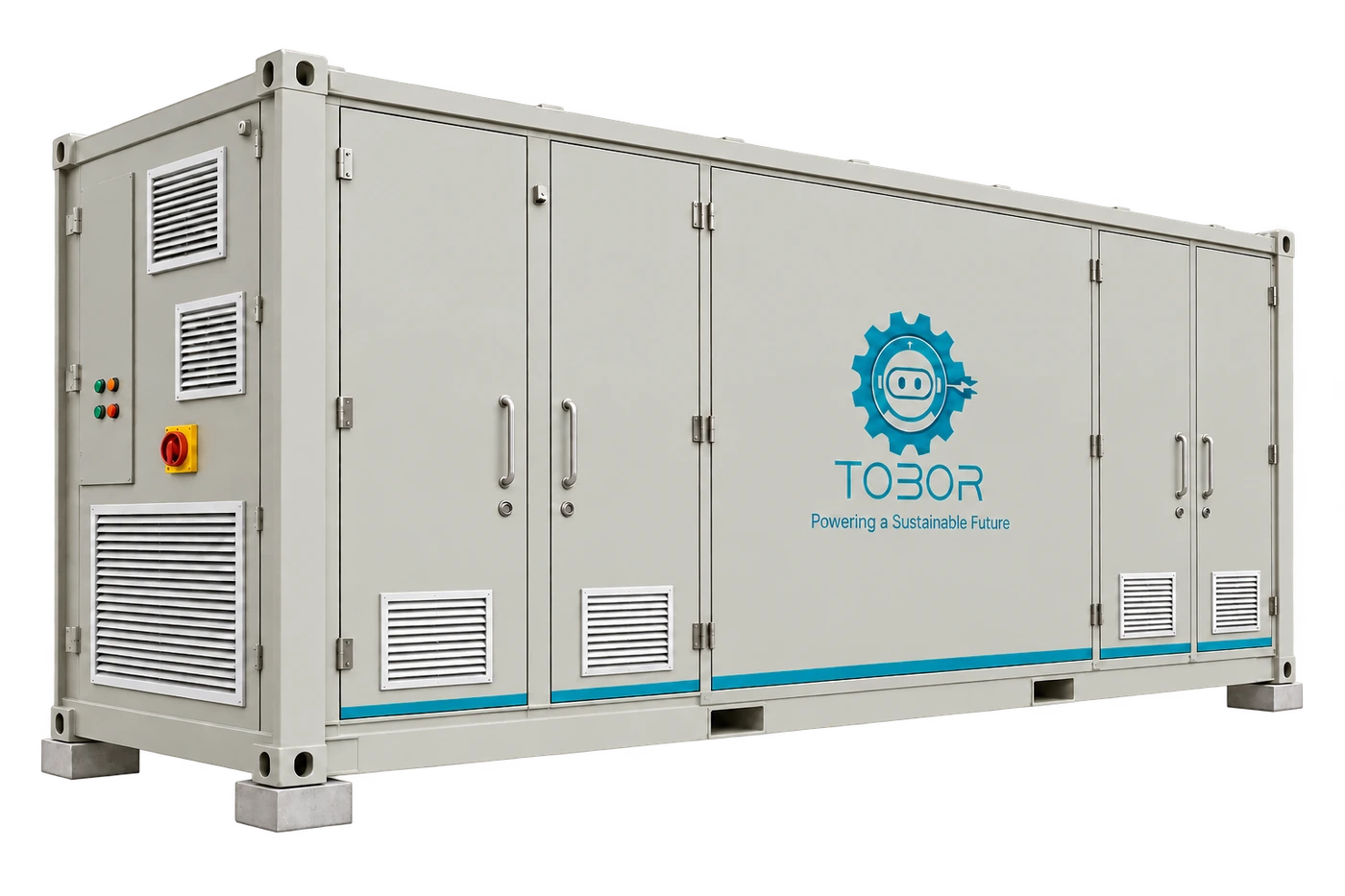
For industrial facilities, charging hubs and renewable-energy projects, TOBOR connects battery storage with power conversion and controls. The starting point is your site's power demand and operating profile.
This is TOBOR's own company profile. The linked catalog describes product configurations; project-specific guarantees are agreed in the offer.
Assess the system as a whole: how it stores energy, how it converts power, and how the controls respond to your site.
LFP cells are integrated into system configurations with battery management and thermal management. Specify energy, duty cycle and space constraints together.
Review the BESS catalog →Battery management, bidirectional power conversion and energy management connect the battery to the load, grid and generation sources.
Explore the engineering →Load profiles, grid interfaces and dispatch needs inform the configuration. Review a 1.25 MW / 5 MWh reference design and discuss the changes your project requires.
See the reference architecture →The engineering example is a reference design, not a claim of a commissioned installation. Cell integration is distinct from cell manufacturing; confirm the cell maker and model in your project documentation.
Three examples from the TOBOR catalog, all above 250 kW. Compare the complete range for nominal energy, system architecture and application.
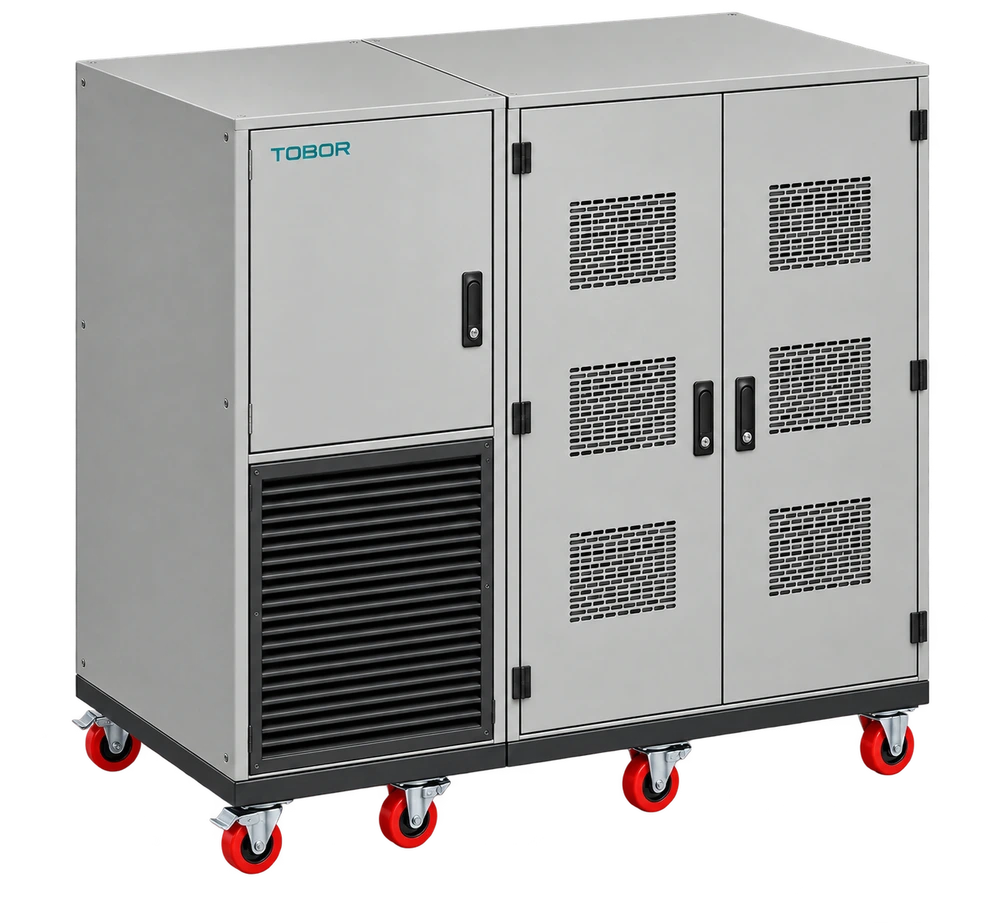
514.5 kWh nominal energy
View specifications ↗2,057.8 kWh nominal energy
View specifications ↗20.26 MWh nominal energy
View specifications ↗kW / MW measures power. kWh / MWh measures energy. Usable runtime depends on the load, operating limits and losses.
Compare all systems above 250 kW ↗Start with the role you need. A system manufacturer supplies battery storage equipment; an integrator connects its components and controls; an EPC contractor delivers the contracted site works; a project developer structures and develops the project. Responsibilities can overlap, so define them in the scope.
TOBOR's offering on this page is BESS system manufacturing and integration. Use the questions below to compare proposals on the same basis.
| Compare | Ask every supplier for | Discuss with TOBOR |
|---|---|---|
| Power & energy | Continuous AC power, nominal and usable energy, discharge duration and the measurement point. | Published PTX/CTX power and nominal energy appear in the catalog. Request the usable AC energy for the proposed duty cycle. |
| Scope & interfaces | Battery, PCS, BMS, EMS, thermal management, protection, transformer, civil works and commissioning responsibilities. | Review the selected system architecture and an itemised scope; confirm which equipment and site works are included. |
| Performance & warranty | Operating temperature, cycling assumptions, efficiency, degradation, throughput limits and warranty exclusions. | Confirm the applicable guarantees and warranty terms in the project offer for the chosen configuration. |
| Tests & project evidence | Applicable test reports, equipment documentation, commissioning procedures and relevant customer references. | Request documentation for the proposed equipment and project. Catalog ratings are separate from commissioned capacity. |
| Service & operation | Site access, service coverage, response commitments, spares, remote monitoring and ownership of operating data. | Define support, maintenance and controls responsibilities with TOBOR before finalising the project. |
A product rating, an engineering design and a completed project demonstrate different things. Ask for traceable model specifications, the proposed scope and relevant project documentation. Evaluate all suppliers against the same requirements.
Discuss the evidence your project needs ↗Share the load profile, power demand, required duration, solar generation and grid connection. The engineering starts there.