
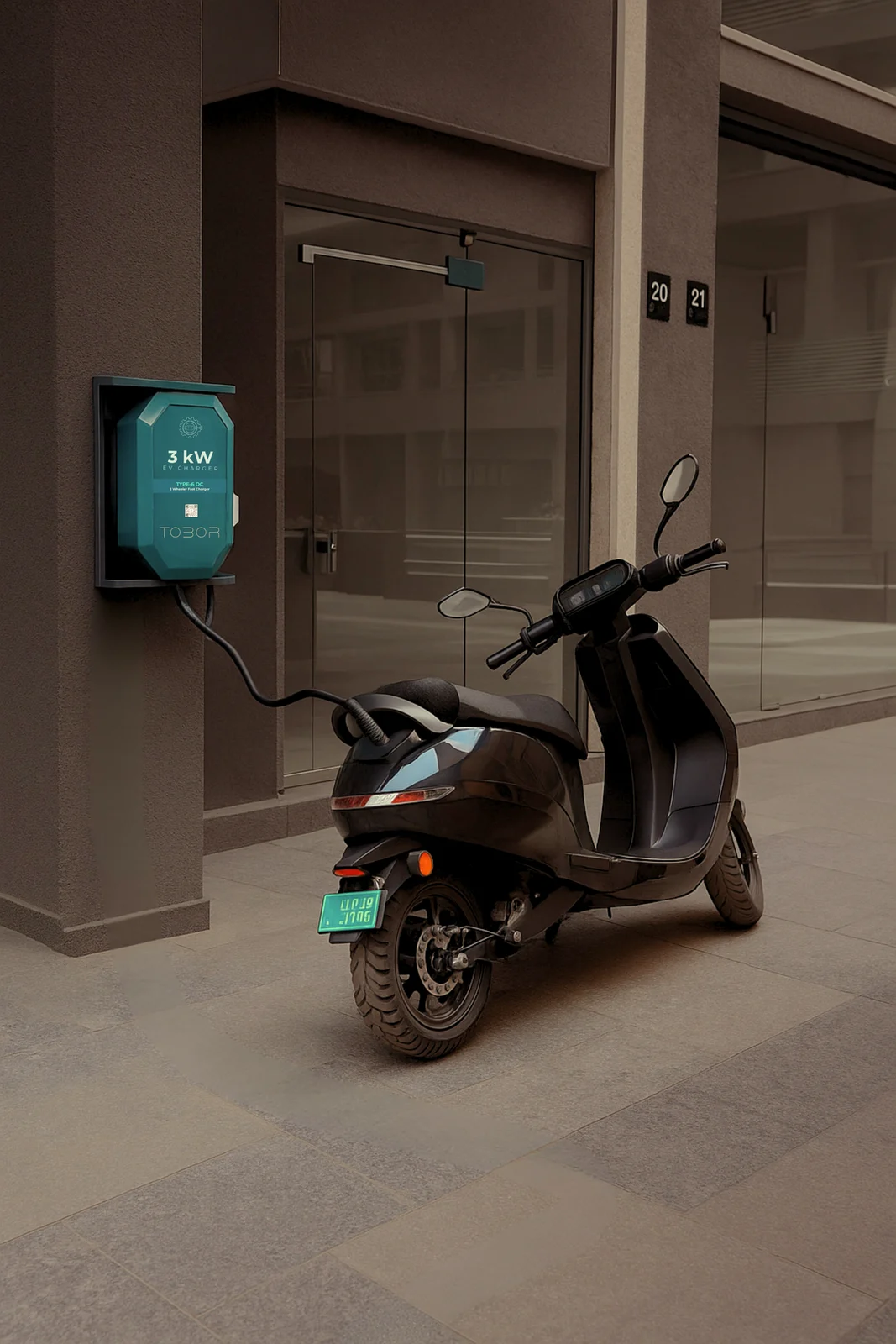
 Low-voltage DC
3 kW Type 6
Single-phase · 220 V AC ±10%
A compact DC charging option for compatible two- and three-wheelers.
Configure this charger →Purpose-built DC charging for the two- and three-wheelers that keep cities moving. Our highest-selling charger category brings compact hardware, connected operations and practical fleet charging together.
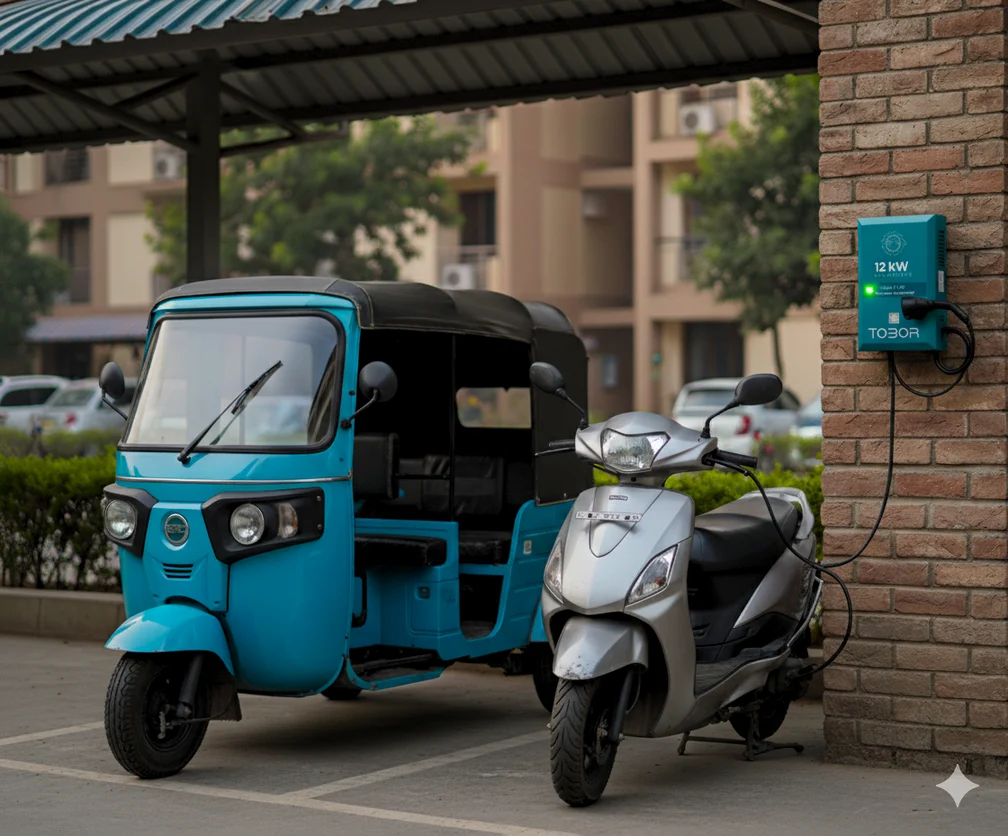 2W / 3W · Fleet favourite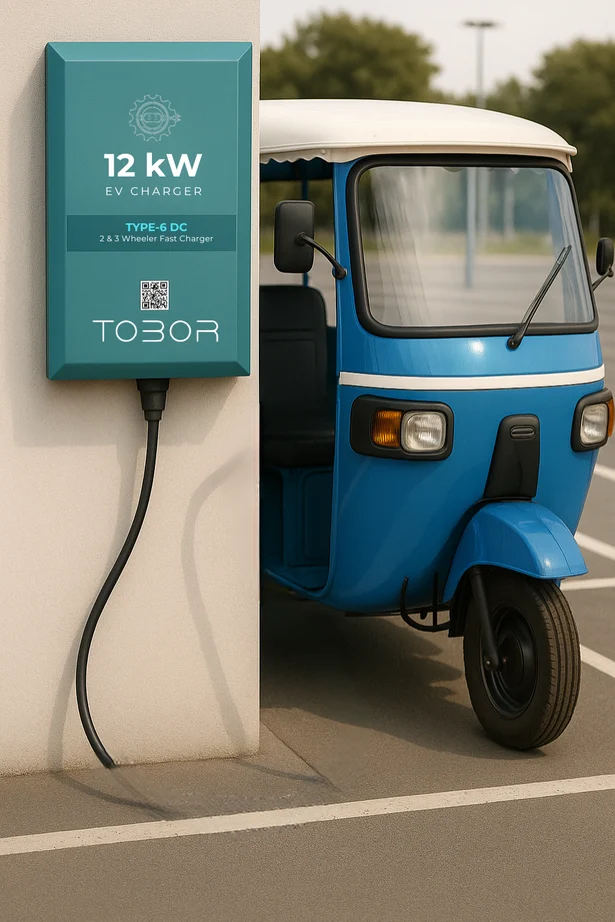
A low-voltage DC charger for compatible 2W and 3W vehicles, with a wall-mounted or stand-mounted installation. Connect charging sessions to the app and your operations team through Wi-Fi or 4G.
*The brochure presents Type 6 and Type 7 compatibility for the 12 kW family. Connector configuration, vehicle communication and available power per output are confirmed for your fleet before supply. Actual charging power follows the vehicle and the selected configuration.
Discuss the 12 kW charger ↗Alongside the 12 kW model, choose compact 3 kW and 6 kW configurations to suit the available supply and the vehicles you run.
Low-voltage DCSingle-phase · 220 V AC ±10%
A compact DC charging option for compatible two- and three-wheelers.
Configure this charger →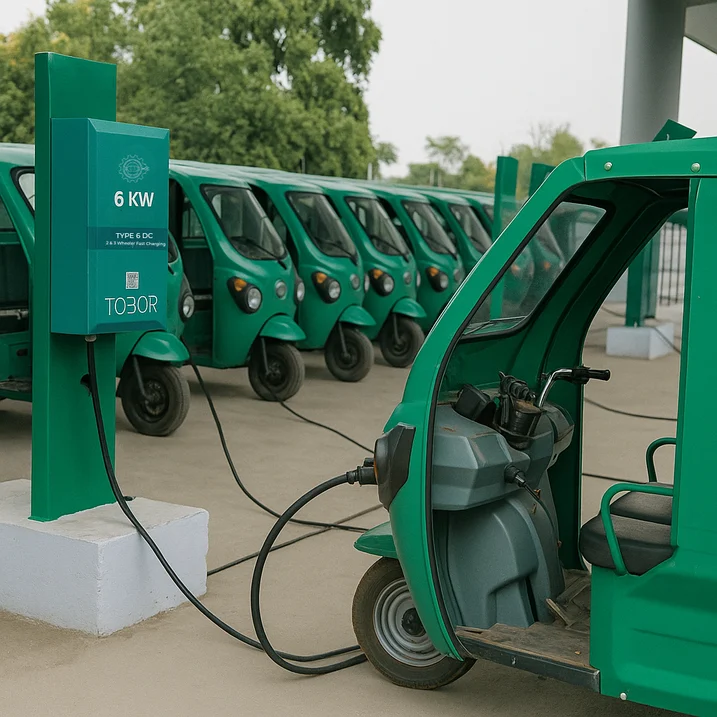 Low-voltage DC
Single-phase · 220 V AC ±10%
More charging power for compatible delivery vehicles and fleet operations.
Configure this charger →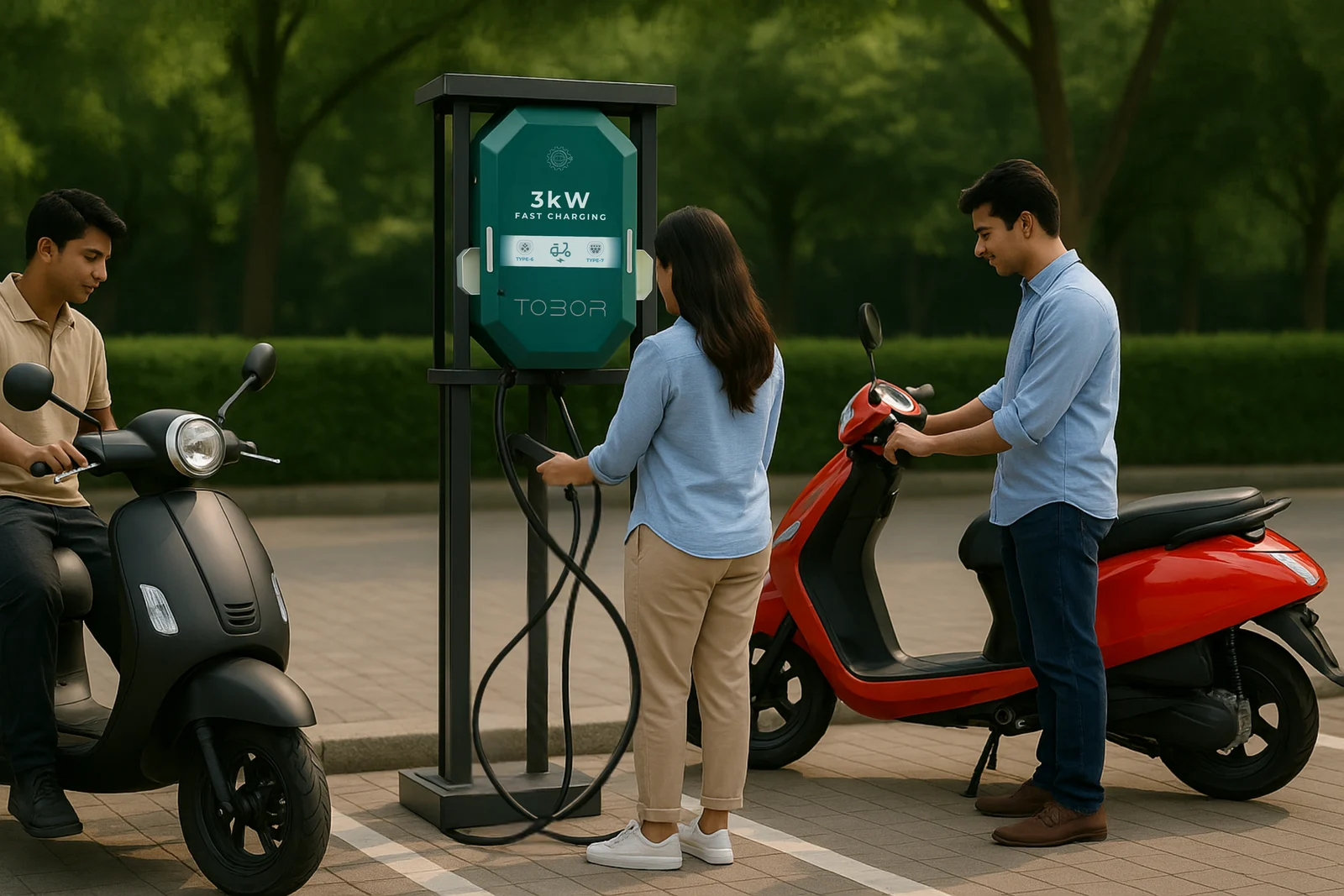 Low-voltage DC
Single-phase · 220 V AC ±10%
Type 6 and Type 7 configurations for sites serving a mix of light EVs.
Configure this charger →Plan charging around rider shifts and dispatch windows. Select the charger and connector against your vehicle list, then manage sessions through the app.
Build a dedicated charging area for compatible e-rickshaws and electric cargo vehicles, with the right input supply and a practical mounting layout.
Bring compact charging points into managed parking and fleet hubs. Add CSMS for visibility across charger status, sessions and site operations.
No. We match the physical connector, battery voltage, communication protocol and charging limits to the vehicle. Share the make, model and battery specification for every vehicle in your fleet so the correct configuration can be confirmed.
The brochure lists single-phase 220 V AC ±10% for the 3 kW and 6 kW models, and three-phase 400 V AC ±10% for the 12 kW model. Our team checks your sanctioned load, protection and cable sizing as part of the site design.
Yes, a site can be designed with solar integration and TOBOR battery storage to manage the charging demand. The final system depends on daily energy use, charging windows and grid capacity.
Send the number of vehicles, their battery capacities, daily distance and available charging time. We use that information to recommend the charger mix and confirm the output configuration with your vehicle requirements.
Connect your chargers with solar, battery storage and TOBOR software. One team can help size the system, coordinate power and support daily operations.